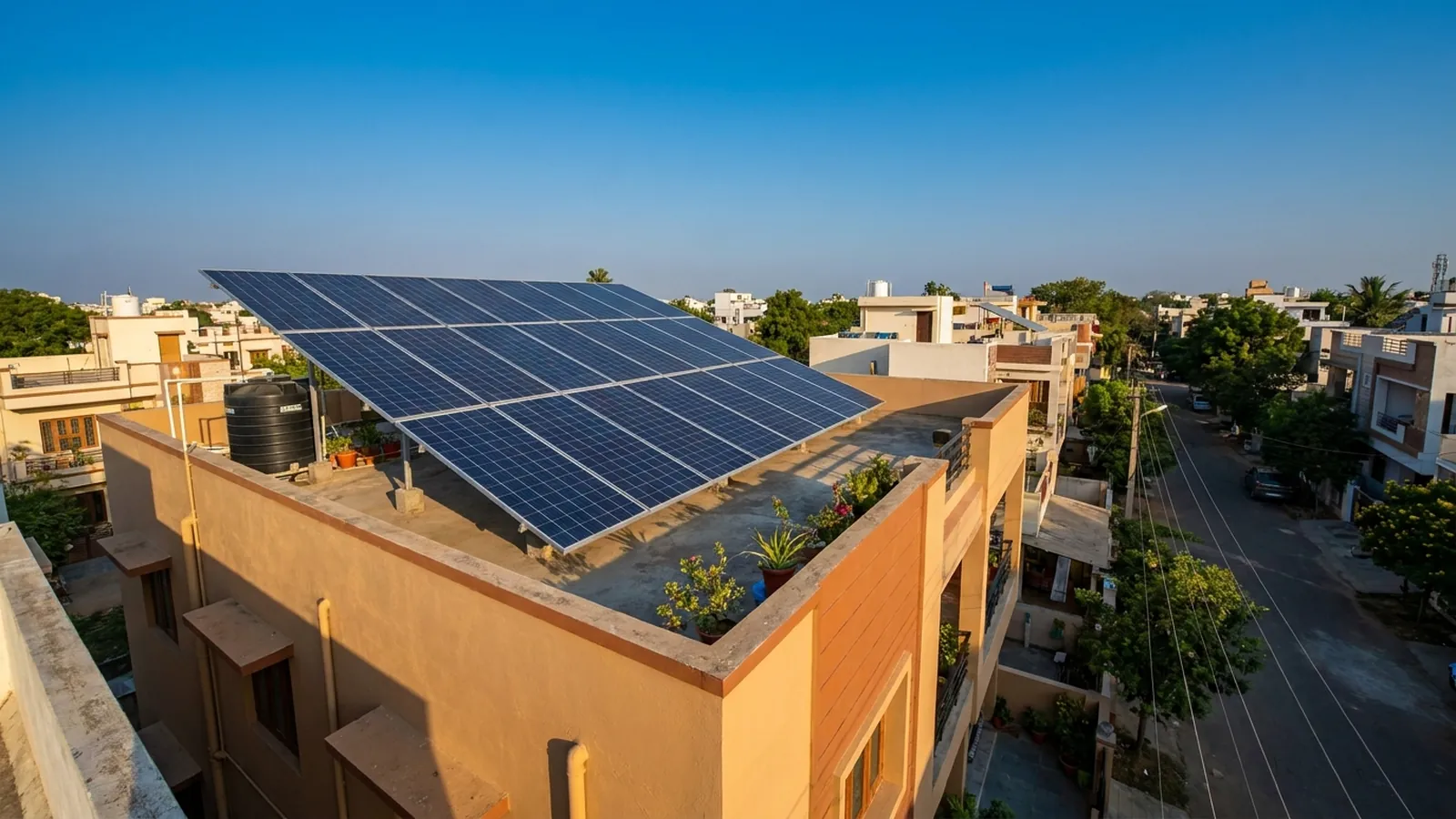
The 5 kW system is the right choice when a 3 kW system is simply not enough, when you have multiple ACs, a large household, or a small home-based business that runs power-hungry equipment. Unlike the 3 kW sweet spot where the PM Surya Ghar subsidy covers about ~41% of the cost, the 5 kW system requires you to fund the additional 2 kW without subsidy support. But the electricity savings per year are proportionally larger, and for genuinely high-consumption homes, the payback is just as compelling.
Who actually needs a 5 kW system?
A 5 kW system is the right size if any two of these are true for your home:
- Monthly electricity bill consistently above ₹3,000
- You run two or more 1.5-ton ACs for more than 6 hours per day
- You have a geyser, washing machine, and fridge all running simultaneously
- Your home has 4+ bedrooms with all rooms actively occupied
- You run a home office or small business (printers, servers, shop equipment)
If your monthly bill is ₹1,500-₹2,500, a 3 kW system is more economical because the PM Surya Ghar subsidy covers a higher percentage. At 5 kW, the same ₹78,000 subsidy covers only ~28% of the cost versus ~41% at 3 kW. But when your consumption genuinely justifies 5 kW, the higher absolute electricity savings make up for the lower subsidy percentage.
5 kW solar panel price in India: full cost breakdown (2026)
A turnkey 5 kW (5.45 kW, 10-panel) residential solar installation from r-solar costs ₹2,76,706 in 2026, roughly ₹50,000 per kW. The per-kW cost drops slightly compared to a 3 kW system because fixed costs (site visit, inverter wiring, net metering filing) are spread over more kW. Here is what makes up that cost:
| Component | Cost | % of total |
|---|---|---|
| 10× ALMM-approved monocrystalline solar panels (500-550W each) | ₹1,45,000-₹1,68,000 | ~55% |
| 5 kW string inverter (Sungrow / Growatt / Sofar / Delta) | ₹27,000-₹35,000 | ~11% |
| Galvanised steel mounting structure (HDG, elevated) | ₹22,000-₹28,000 | ~9% |
| AC + DC cabling, conduits, junction boxes | ₹13,000-₹17,000 | ~6% |
| Earthing kit, MCBs, SPDs, DCDB/ACDB | ₹8,000-₹11,000 | ~3% |
| Civil work (mounting base, cable trays, weatherproofing) | ₹6,500-₹10,000 | ~3% |
| Net metering application + DISCOM coordination | ₹3,000-₹5,000 | ~2% |
| Installation labour, commissioning, monitoring setup | ₹21,000-₹28,000 | ~8% |
| Total turnkey installed cost | ₹2,76,706 | 100% |
What your r-solar price actually buys
A cheap quote prices the panels and stops there. The hardware lands on your roof and the rest becomes your problem: finding an electrician, filing the DISCOM net metering application, registering on the PM Surya Ghar portal, and chasing the ₹78,000 subsidy yourself for months.
An r-solar price is for the finished job, not a box of parts. It covers:
- System design sized to your bill, roof and sanctioned load
- ALMM-approved panels, inverter and mounting structure
- Professional installation and electrical safety compliance
- DISCOM net metering application and integration
- The full PM Surya Ghar subsidy filing, followed through until the ₹78,000 reaches your bank account
- One team accountable from your first call to a commissioned, subsidy-credited system
Quotes that look cheaper skip this work and leave you to install, file and chase the subsidy on your own.
For a cross-size comparison (1 kW through 10 kW), see our solar panel installation cost guide. For the 3 kW system that's optimal for smaller homes, see 3 kW solar system India 2026 or the in-between 4 kW solar system price guide, or the smaller 1 kW and 2 kW systems.
How much electricity does a 5 kW system generate?
A 5 kW solar system in India generates approximately 550-650 units (kWh) per month, or roughly 18-22 units per day. Annual generation is 6,000-7,200 kWh depending on your state and rooftop orientation.
| State | Daily avg (units) | Monthly (units) | Annual (kWh) |
|---|---|---|---|
| Rajasthan, Gujarat | 21-23 | 630-700 | 7,700-8,500 |
| Madhya Pradesh, Maharashtra, Karnataka, Andhra Pradesh | 19-21 | 570-630 | 7,000-7,600 |
| Tamil Nadu, Punjab, Haryana, Uttar Pradesh | 17-19 | 510-570 | 6,200-7,000 |
| Bihar, Odisha, West Bengal | 15-17 | 450-510 | 5,500-6,200 |
| Northeast states, Coastal Kerala | 13-15 | 390-450 | 4,800-5,500 |
In Madhya Pradesh (where r-solar operates), 5 kW systems consistently deliver 580-620 units/month in clear weather, dropping to 480-540 in monsoon season (June-September). Annual generation of approximately 7,000-7,200 kWh is typical. Net metering in MP credits excess generation at retail tariff, so your summer surplus bankrolls winter shortfalls with no cash outflow.
Subsidy math: why 5 kW gets the same ₹78,000 as 3 kW
The PM Surya Ghar Muft Bijli Yojana uses a tiered subsidy structure that caps at 3 kW:
- 1st kW: ₹30,000 subsidy
- 2nd kW: ₹30,000 subsidy (₹60,000 cumulative)
- 3rd kW: ₹18,000 subsidy (₹78,000 cumulative, cap reached)
- 4th and 5th kW: ₹0 additional subsidy
For a 5 kW system at ₹2,76,706, the ₹78,000 subsidy covers ~28% of the cost. This compares unfavourably to ~41% for a 3 kW system, but the higher absolute electricity savings more than compensate for households with genuinely large electricity loads.
| 5 kW system installed cost | ₹2,76,706 |
| PM Surya Ghar subsidy (capped at 3 kW) | – ₹78,000 |
| Net cost after subsidy | ₹1,98,706 |
| Subsidy as % of cost | ~28% |
For the full subsidy process, including eligibility criteria, required documents, and application steps, see PM Surya Ghar subsidy guide 2026.
5 kW solar system EMI with PM Surya Ghar bank loan
PM Surya Ghar loans are charged SBI's concessional 5.75% up to ₹2 lakh; banks lend up to ₹6 lakh, but above ₹2 lakh SBI charges 7.90%. For a 5 kW system at ₹2,76,706, this example borrows ₹2 lakh at the lower rate and self-funds the remaining ₹76,706 as a down payment:
| Turnkey installed cost (5 kW) | ₹2,76,706 |
| Down payment (customer pays upfront) | ₹76,706 |
| Loan amount (kept at ₹2 lakh for the 5.75% rate) | ₹2,00,000 |
| SBI rate (loans up to ₹2 lakh) | 5.75% p.a. |
| Tenure | 10 years |
| EMI before subsidy credit | ~₹2,195 / month |
| Subsidy credited (month 2), part-paid to principal | – ₹78,000 |
| Remaining principal after subsidy | ₹1,22,000 |
| EMI after subsidy part-payment | ~₹1,339 / month |
Compare ~₹1,339/month EMI to the electricity bill that a 5 kW system replaces (typically ₹3,000-₹5,000 per month for a large home with multiple ACs). Monthly net savings after EMI: ₹1,650-₹3,650 from month one. For other bank rates, see our PM Surya Ghar solar loan interest rates comparison: Canara Bank, Bank of Baroda, PNB and Indian Bank also list 5.75% for loans up to ₹2 lakh.
Payback period and 25-year savings for 5 kW
For a 5 kW system from r-solar, the realistic payback period is 4-5 years under CAPEX with subsidy. Here is the calculation:
- Net cost after subsidy: ₹1,98,706
- Annual generation: ~6,500 kWh (India average for 5 kW)
- Electricity tariff: ₹6-9 per unit (varies by state and slab)
- Annual savings: ₹39,000-₹58,500
- Simple payback: 4-5 years on net cost, 5-7 years on gross cost
After payback, the system saves ₹10-18 lakh over the remaining life of the 25-year panel warranty. Unlike financial instruments, solar savings are inflation-proof. As electricity tariffs rise (historically 5-8% per year in India), your savings compound. A system saving ₹50,000 today saves ₹90,000-₹1,00,000 annually in year 10.
Key components of a 5 kW rooftop solar system
These are the same building blocks every residential rooftop system uses. If you want the general picture before the 5 kW specifics, read our guide to solar panels for the home in India.
A grid-tied 5 kW on-grid rooftop system has these key components:
- Solar panels (10×): 500-550W ALMM-approved mono PERC or TOPCon panels. Only ALMM-listed panels qualify for PM Surya Ghar subsidy, so verify your installer's panel brand against the ALMM list before signing the contract.
- 5 kW string inverter: Converts DC from panels to AC for home use. Top brands in India 2026: Sungrow SG5KTL, Growatt MOD 5000TL3-X, Sofar Solar, Delta. Warranty: 5 years (extendable to 10-12 years).
- Mounting structure: Hot-dip galvanised (HDG) steel rails rated for 150 kmph wind load. For MP specifically, structures must meet IS 875 Part 3 wind zone requirements.
- DC cables + combiner: 4 sq.mm DC cables with MC4 connectors. DCDB with fuses and SPD (surge protection device) is mandatory under CEA 2019 standards.
- AC cables + ACDB: 6-10 sq.mm cables from inverter to distribution board. Includes dedicated MCB, isolator, and energy meter for net metering.
- Monitoring system: Most inverters include WiFi/GPRS monitoring (Sungrow iSolarCloud, Growatt ShinePhone). Tracks daily generation, alerts on faults.
The 10 panels require approximately 350-380 sq ft of shadow-free roof area, oriented south (or as close to south as your roof allows). A slight east or west tilt reduces annual generation by 5-12%; shading by a water tank, tree, or neighbouring structure can reduce it by 15-40%. Have your installer provide a shading analysis before finalising the layout.
Get a free quote for your 5 kW system
Tell us your details. r-solar designs, installs and handles your subsidy. Free callback within 2 hours (10 AM–7 PM IST).
Frequently asked questions

r-solar editorial team
r-solar is a MNRE-empanelled solar EPC company serving residential and industrial customers across Madhya Pradesh, and the solar business of Farmkart Group, which has served rural India since 2017. Our team of engineers and energy consultants has designed and commissioned over 1,500 rooftop and ground-mount systems across MP.
Get a free 5 kW quote for your homeRelated reading
- → 3 kW Solar System India 2026: Cost and Payback (for smaller homes)
- → 4 kW Solar Panel Price in India 2026: Cost, Subsidy and EMI (for mid-size homes)
- → 10 kW Solar System India 2026: Price and Payback (for large homes and small businesses)
- → Solar Panel Installation Cost India 2026 (1-10 kW comparison)
- → PM Surya Ghar Solar Loan Interest Rates 2026 (all banks)
- → PM Surya Ghar Subsidy Guide: How to Apply and Get ₹78,000
- → ALMM List 2026: Which Solar Panel Brands Are Subsidy-Eligible?