Net metering rules and application process explained (MP)
Under MPERC's RG-39(II) of 2024, amended in June 2026, solar systems of every consumer category up to 500 kW qualify for net metering in Madhya Pradesh. Exported units offset the units you import, bill after bill, and units left over at the end of the settlement year are paid for by the DISCOM. Here is how billing and settlement work, the regulated DISCOM timelines, and the full application process.
 r-solar Editorial Team
Updated Sep 15, 2026
12 min read
r-solar Editorial Team
Updated Sep 15, 2026
12 min read
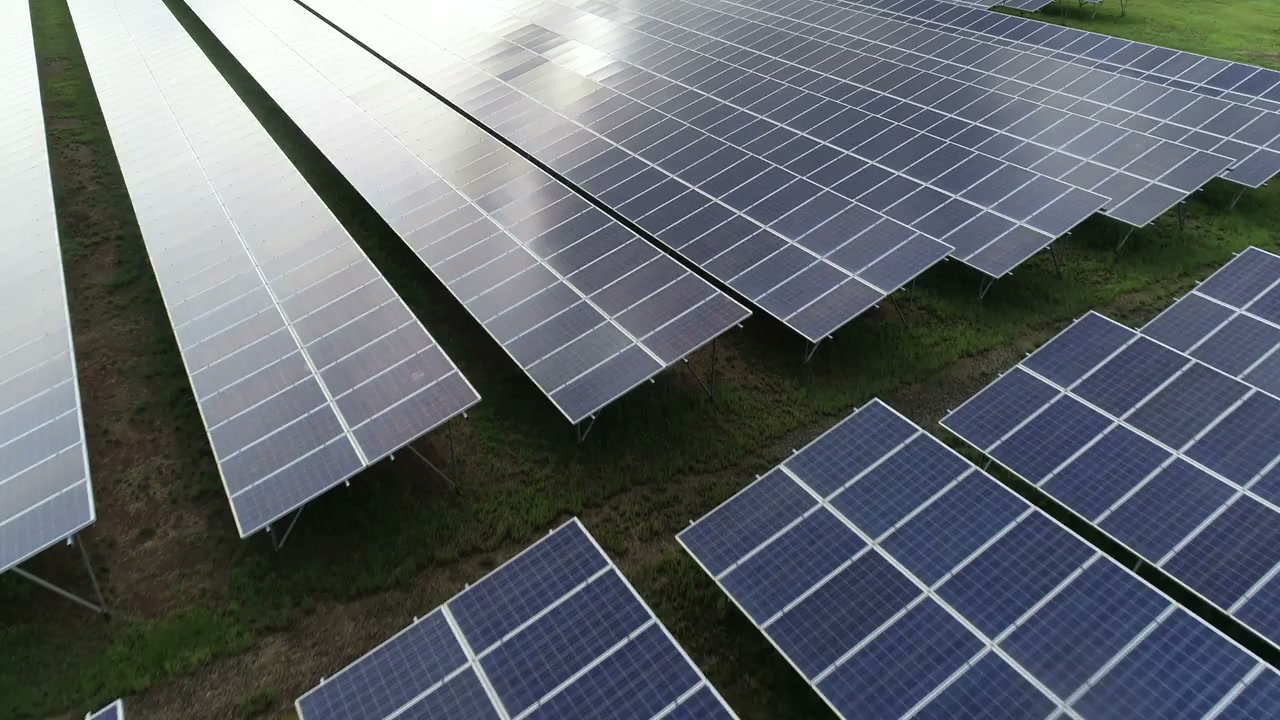
Net metering is a billing mechanism that allows solar power system owners to offset their electricity costs by feeding excess solar-generated power back to the grid. In Madhya Pradesh, this system enables residential, commercial, and industrial consumers to maximise the return on their solar investments while contributing to India's renewable energy goals. Under the Madhya Pradesh Electricity Regulatory Commission (MPERC) regulation RG-39(II) of 2024, amended in June 2026, consumers can install solar systems up to 500 kilowatts (kW) capacity, capped at their sanctioned load or contract demand. This policy represents a significant opportunity for citizens across the state to reduce their electricity bills while supporting India's clean energy transition.
Quick reference: MP net metering at a glance
| Maximum system size | 500 kW (capped at sanctioned load or contract demand) |
| Year-end surplus payout | Unused units paid by 15 November at the lowest solar tariff discovered in MP |
| DISCOM timelines | Approval within 30 days; meter and commissioning within 15 days of installation |
| Processing fee | ₹1,000 (waived for PM Surya Ghar applicants) |
Understanding net metering: how it works
The fundamental concept
Net metering operates on a simple principle: your solar energy consumption is netted against the power you export to the grid. During daylight hours when your rooftop solar panels produce more electricity than you consume, the excess power flows back into the grid. The utility then credits your electricity account for this exported power. Conversely, during evening, night, and cloudy periods when your solar panels cannot generate sufficient electricity, you draw power from the grid as normal. The net billing is calculated based on the balance between power imported and exported over a billing cycle.
This system requires a bidirectional meter (also called a net meter), which can measure electricity flow in both directions. Unlike conventional unidirectional meters that only record consumption, bidirectional meters track the net energy flow in real-time, providing accurate data for billing purposes.
Practical example
Consider a household with a 5 kW solar system in Madhya Pradesh. On a typical sunny day:
- 6:00 AM to 3:00 PM: Your solar panels generate 5 units of electricity per hour, but your household consumes only 3 units. The excess 2 units flow into the grid.
- 6:00 PM to 9:00 PM: Your solar panels produce minimal power, but your household requires 3 units, which you draw from the grid.
Under net metering, the utility calculates your net consumption by subtracting exported energy from imported energy. If you exported 2 units and imported 3 units, your net consumption is 1 unit for that period. You are billed only for this 1 unit of net consumption instead of the full 3 units you drew from the grid.
Madhya Pradesh net metering regulations
Regulatory framework and capacity limits
The Madhya Pradesh Electricity Regulatory Commission (MPERC) notified the Grid Interactive Renewable Energy Systems and Related Matters Regulations [Revision-II], 2024, RG-39(II) of 2024, on 14 March 2024, and amended them in June 2026 through the First Amendment, ARG-39(II)(i) of 2026. The key rules are:
Maximum Capacity: Consumers can install solar systems up to 500 kilowatts (kW), provided that the installed capacity does not exceed your sanctioned load (for residential consumers, typically 2-10 kW) or contract demand (for commercial and industrial consumers).
Other arrangements: Gross metering is allowed up to 1 MW, and group net metering and virtual net metering below 100 kW. The minimum system size is 1 kW.
System size limit: Your solar system capacity must not exceed:
- Your contract demand, if you are on a demand-based tariff, or
- Your sanctioned load, if you are on a sanctioned-load-based tariff
For example, if your home's sanctioned load is 5 kW, you can install a maximum 5 kW system. For a small commercial establishment with 20 kW sanctioned load, you can install up to 20 kW.
Transformer limit: The total solar capacity connected to a distribution transformer cannot exceed 80% of its rated capacity, and DISCOMs allot this capacity transformer by transformer, on a first-come, first-served basis.
Eligibility and consumer categories
All categories of consumers are eligible for net metering under RG-39(II) of 2024, whether they own the system or lease it from a renewable energy service company (RESCO):
- Residential Consumers: Individual homeowners with active electricity connections from any of Madhya Pradesh's three distribution companies: MP Poorv Kshetra (East, Jabalpur), MP Madhya Kshetra (Central, Bhopal) or MP Paschim Kshetra (West, Indore).
- Commercial Consumers: Retail establishments, offices, hotels, restaurants, shopping centres, and other business entities with commercial electricity connections.
- Industrial Consumers: Manufacturing units, factories, and industrial facilities consuming industrial tariff power.
- Agricultural Consumers: Farmers and agricultural enterprises operating agricultural feeders or connections.
Technical and eligibility requirements
Before applying for net metering, ensure you meet these mandatory requirements:
- Active DISCOM Connection: You must have an existing, active electricity connection with one of the three Madhya Pradesh distribution companies.
- No Pending Arrears: Consumers with unpaid electricity dues are not entitled to net metering.
- Property Ownership or Authorisation: You must be the owner or authorised occupant of the premises where the solar system will be installed. Tenants typically cannot install permanent solar systems without owner consent.
- Grid-Connected System: Net metering is available for grid-interactive systems, with or without battery backup. A fully off-grid system that never connects to the grid cannot use net metering.
- Technical Compliance: Your solar installation must comply with Central
Electricity Authority (CEA) guidelines and DISCOM specifications, including:
- Solar panels meeting IEC 61215 international quality standards
- Auto-synchronising equipment for grid synchronisation
- String inverters with anti-islanding protection mechanisms
- Proper earthing and electrical safety measures
- Surge protection devices and disconnect switches
- High-Tension (HT) Connection for Larger Systems: If your system exceeds 112 kW (but remains below 500 kW), your DISCOM connection must be on a high-tension (HT) supply, typically available only to larger commercial and industrial consumers.
Billing mechanism and monthly settlement
Monthly billing calculation
DISCOM calculates your net electricity usage every billing cycle (typically monthly) as follows:
- Total Imports (kWh): Sum of all units of electricity purchased from the grid during the month.
- Total Exports (kWh): Sum of all units of electricity fed into the grid from your solar system during the month.
- Net Consumption: Total Imports minus Total Exports.
Your billing is based on this net consumption figure.
Calculation example
Consider a typical monthly scenario:
- Total units imported from grid: 100 kWh
- Total units exported to grid: 40 kWh
- Electricity tariff rate: ₹7 per kWh
- Net consumption: 100 - 40 = 60 kWh
- Electricity bill: 60 × ₹7 = ₹420
Without net metering, you would pay 100 × ₹7 = ₹700. Net metering reduces your bill by ₹280, representing a 40% savings in this example.
Credits and carry-forward mechanism
In months when your solar system generates more electricity than you consume, excess units are carried forward to the next billing cycle as credited units, not rupees. These credits automatically adjust your future bills. For instance:
- January: You export 50 kWh more than you import. This creates 50 kWh of credit.
- February: You normally would consume 100 kWh, but you have 50 kWh credit from January. Your bill is calculated based on 50 kWh of net consumption.
Annual settlement of unused units
MPERC's settlement year runs from the October billing month to the September billing month of the next year. Units still unadjusted at the end of September are paid for by the DISCOM by 15 November, at the lowest solar tariff discovered in Madhya Pradesh bidding in the preceding financial year (Regulation 8A(4)). The credit then starts again from zero. Settlement at the Average Power Purchase Cost (APPC) applies only to renewable plants other than solar and wind.
MPERC's tariff orders do not publish this payout rate as a separate figure, so ask your DISCOM which discovered tariff it applied. For scale, recent MP solar bids for PM-KUSUM-C plants came in at ₹2.42 to ₹2.94 per unit (MPERC order in Petition 22/2025, 13 August 2025), far below the ₹6 to ₹8 a unit saves you on your bill.
Settlement example: If 40 units remain unadjusted at the end of the September billing month and the applicable discovered tariff is ₹2.50 per unit (an illustrative figure), the DISCOM pays 40 × ₹2.50 = ₹100 by 15 November. The same 40 units used against your own consumption would have saved about ₹280 at a ₹7 tariff, so size your system to your consumption rather than to export.
Fixed charges still apply
Even with net metering, consumers must pay certain fixed charges irrespective of units consumed:
- Fixed charges on your tariff (where they depend on consumption, they are worked out on imported units)
- Demand charges (applicable to HT connections)
- Minimum service charges
- Electricity duty and other levies, charged on net billed units
These charges appear separately on your bill and cannot be offset by solar credits.
Bidirectional metering infrastructure
Understanding the bidirectional meter
A bidirectional meter (net meter) is essential equipment for net metering. Unlike conventional meters that record only consumption:
- Bidirectional meters measure power flow in both directions simultaneously
- They record units exported to the grid separately from units imported
- They provide accurate real-time data for settlement calculations
- They comply with International Electrotechnical Commission (IEC) standards
Who pays for the meter: Under RG-39(II), your existing meter is replaced by the bidirectional meter at the prosumer's cost. You can buy the meter yourself; the DISCOM tests, installs and maintains it, and every meter must have Advanced Metering Infrastructure (AMI) capability. For PM Surya Ghar connections, the DISCOM cannot charge a meter testing fee (June 2026 amendment), and the net meter can be provided by the DISCOM or bought from enlisted meter vendors.
Meter installation and commissioning
After your net metering application is approved, DISCOM technicians will:
- Remove your existing meter
- Install the bidirectional meter at your premises
- Conduct a system test to ensure proper two-way communication
- Document the meter reading and issue commissioning confirmation
- Begin billing under net metering from the date of commissioning
The regulation gives the DISCOM 15 days from receiving your installation certificate to sign the connection agreement, install the meter and commission the system. For each day of delay it owes you ₹500 in compensation.
Application process and regulatory approvals
Step-by-step application procedure
Obtaining net metering approval involves the following process:
Electricity bill, property deed/rental agreement, government ID (Aadhaar/PAN), technical specs and single-line diagram.
File at your DISCOM's office or web portal (MP Poorv / Madhya / Paschim Kshetra) with the ₹1,000 processing fee. PM Surya Ghar applicants apply on pmsuryaghar.gov.in and pay no fee.
DISCOM completes the technical feasibility study within 15 days, or the application is deemed accepted. Systems up to 10 kW need no feasibility study.
DISCOM issues the Letter of Approval within 30 days of acknowledging your application, confirming capacity and any changes needed. Green light to install.
r-solar completes the rooftop installation and submits the installation certificate. For PM Surya Ghar systems, the DISCOM inspects the installation before the subsidy is released.
Signed with the DISCOM when the meter is installed. PM Surya Ghar applicants sign no separate agreement: it is part of the online application.
Within 15 days of your installation certificate, the DISCOM installs the bidirectional meter and commissions the system, or pays ₹500 per day of delay. Net metering billing starts from this date.
r-solar handles the net metering paperwork
For every system we commission, we file the DISCOM application, run the technical scrutiny back-and-forth, and book the bidirectional meter inspection. Zero paperwork for you.
Talk to a net metering specialistFinancial benefits and government schemes
PM Surya Ghar Muft Bijli Yojana (Prime Minister Solar Home Free Electricity Scheme)
The central government's PM Surya Ghar Muft Bijli Yojana is integrated with net metering policies across India, including Madhya Pradesh:
Subsidy Amounts Based on System Size:
| System Capacity | Central Subsidy | Estimated Installation Cost (After Subsidy) |
|---|---|---|
| 1 kW | ₹30,000 | ₹40,000-₹60,000 |
| 2 kW | ₹60,000 | ₹80,000-₹120,000 |
| 3 kW+ (capped at 3kW) | ₹78,000 | ₹100,000-₹140,000 |
Scheme Benefits:
- PM Surya Ghar systems still need DISCOM inspection and a net metering agreement, and the subsidy is released only after the DISCOM verifies the installation
- Eligible consumers receive highly subsidised installations
- The scheme aims to provide up to 300 units of free electricity monthly to participating households (actual free units depend on your system's generation capacity)
- As of December 2024, over 10,000 households in Madhya Pradesh have benefited from this scheme
Eligibility for PM Surya Ghar:
- Grid-connected rooftop solar systems only
- System capacity typically 1-3 kW for residential consumers
- Existing DISCOM electricity connection required
- Apply through the official National Portal: pmsuryaghar.gov.in
What MP's net metering regulation gives you
Beyond the central subsidy, RG-39(II) of 2024 gives net-metered consumers:
- No banking, wheeling or surcharge costs: net and gross metered prosumers are exempt from banking charges, wheeling charges, cross-subsidy surcharge and additional surcharge
- Regulated DISCOM timelines, with ₹500 per day compensation for delays
- No processing fee or meter testing fee for PM Surya Ghar applicants (June 2026 amendment)
- Accelerated depreciation benefits for businesses, under the Income Tax Act
Ready to start earning credits?
Calculate your savingsAlternative net metering arrangements
Group net metering (GNM)
For a consumer with more than one electricity connection, Group Net Metering lets one solar system offset several of your own connections:
How It Works:
- A solar system is installed at one of your premises
- Surplus energy is adjusted against your other service connections
- All connections must belong to the same parent consumer and sit in the same DISCOM area
- Wheeling charges and losses apply to the connections receiving the adjusted energy
Capacity Limits:
- Below 100 kW, and no more than the combined sanctioned load or contract demand of the grouped connections
Advantages:
- One well-sited system instead of several small ones
- Better use of the best available roof
- Centralised system maintenance
Example: A business with a main office (10 kW sanctioned load) and two branch offices (5 kW each) in the same DISCOM area can install up to 20 kW at the main office and adjust the surplus against the branches.
Virtual net metering (VNM)
For consumers without suitable rooftop space, Virtual Net Metering enables participation:
How It Works:
- The entire generation of a shared solar system is exported to the grid
- It is adjusted against the service connections of several participating consumers
- Each consumer is allocated a share of generation based on their agreement
- Capacity must be below 100 kW
- Participating consumers pay wheeling charges, cross-subsidy surcharge, additional surcharge (if applicable) and losses
Use Cases:
- Apartment complexes and condominiums
- Commercial complexes with multiple tenants
- Communities without individual rooftop space
Advantages:
- Enables solar participation without rooftop ownership
- Reduced per-consumer investment
Renewable energy obligations and compliance
Renewable purchase obligation (RPO)
An important policy context for net metering is India's Renewable Purchase Obligation (RPO):
What is RPO?
- DISCOMs are mandated to purchase a certain percentage of electricity from renewable sources
- In Madhya Pradesh, the RPO target is approximately 17% renewable energy by 2025-26
- Your net-metered solar generation contributes toward DISCOM's RPO compliance
Your Benefit:
- Your solar generation counts toward RPO, making utilities more committed to prompt net metering approvals
- DISCOMs often prioritise renewable consumers to meet RPO targets
- Policy stability ensures long-term support for net metering
Critical limitations and restrictions
What net metering does NOT allow
Understanding these restrictions is crucial for realistic expectations:
- Cannot Sell Power to Third Parties: You cannot directly sell your solar-generated electricity to another consumer or commercial entity. All power must flow through the DISCOM grid, and billing is managed solely by DISCOM. Direct power purchase agreements are a separate process and not covered under net metering.
- Off-Grid Systems Ineligible: Systems designed to operate independently (completely off-grid) cannot avail net metering benefits. The system must remain grid-connected at all times.
- No Capacity Oversizing: Your system capacity cannot exceed your sanctioned load. DISCOM will reject applications exceeding this limit, regardless of grid capacity.
- Continuous Grid Connection Mandatory: Your system must remain connected to the grid. Deliberately disconnecting or attempting to disable grid connection may result in penalties and disconnection.
- No Open Access at the Same Time: Net or gross metered consumers cannot also buy power through open access, and net and gross metering cannot be combined.
Other important restrictions
- No storage mandate removal: While you can use batteries for backup, this doesn't change your net metering eligibility
- Different settlement for other renewables: The regulation covers grid-interactive renewable systems generally, but year-end surplus from solar and wind is paid at the discovered tariff, and from other renewables at APPC
- Connection stability required: Frequent disconnections or system faults may result in net metering suspension
Excess power credit settlement rates
How unused units are paid out
| Settlement period | October billing month to September billing month of the next year |
| Payment deadline | 15 November |
| Rate for solar (and wind) surplus | Lowest solar (or wind) tariff discovered in Madhya Pradesh bidding in the preceding financial year |
| Rate for other renewable plants | Average Power Purchase Cost (APPC) |
MPERC does not publish the solar payout rate as a separate yearly figure. Recent MP solar bids for PM-KUSUM-C plants came in at ₹2.42 to ₹2.94 per unit (MPERC order in Petition 22/2025, 13 August 2025); ask your DISCOM which discovered tariff it applies to your settlement.
How to calculate your annual settlement
Example Calculation:
- Units still unadjusted at the end of the September billing month: 60 units
- Illustrative discovered solar tariff: ₹2.50 per unit
- Payment by 15 November: 60 × ₹2.50 = ₹150
Credits are carried in units, not rupees, so the payout depends only on the unused units and the discovered tariff.
Technical and safety requirements
Mandatory safety standards
Your solar system must comply with these standards:
- IEC 61215: International standard for solar panel efficiency and quality
- IEC 61730: Safety requirements for photovoltaic modules
- IEEE 1547: Standard for interconnection of distributed resources
- IS 3043: Indian standard for earthing and bonding for electrical installations
- IS 7638: Protection of equipment from lightning
Grid synchronisation requirements
- Frequency synchronisation: System must maintain ±1 Hz frequency sync with grid
- Voltage compliance: System voltage must be ±10% of nominal grid voltage
- Anti-islanding: Inverter must disconnect within 2 seconds if grid fails
- Harmonics compliance: Total harmonic distortion <5%
Reputable solar installers ensure all these requirements are met during commissioning.
Conclusion and action steps
Net metering represents a transformative opportunity for Madhya Pradesh residents to achieve energy independence while contributing to India's renewable energy transition. Under MPERC's RG-39(II) of 2024, amended in June 2026, the regulatory environment is favourable, transparent, and well-documented.
Key Takeaways:
- Systems up to 500 kW are eligible (subject to sanctioned load limits)
- All consumer categories can apply
- Monthly net billing provides immediate savings
- Unused units are paid out once a year, by 15 November, at the lowest solar tariff discovered in MP
- PM Surya Ghar Yojana provides substantial subsidies
- DISCOM timelines are regulated: approval within 30 days, commissioning within 15 days of installation
- Fixed charges still apply, but net metering eliminates major consumption charges
To Get Started:
- Calculate your solar potential: Use online tools or consult a solar professional to determine optimal system size for your consumption patterns
- Choose an MNRE-approved installer: Before applying for net metering, make sure you're working with a MNRE-empanelled installer: how to choose a solar installer in MP covers exactly what to look for. See also our comparison of local vs national solar companies in MP
- Apply online: PM Surya Ghar households apply on pmsuryaghar.gov.in; other consumers use their DISCOM's web portal or office
- Prepare documentation: Gather proof of ownership, electricity bill, and identification
- Submit application: File with your DISCOM along with the ₹1,000 processing fee (waived under PM Surya Ghar)
- Track progress: Follow up with DISCOM's net metering cell for approval updates
- Install system: Once you receive the Letter of Approval, complete installation with your chosen vendor
- Schedule inspection: Request DISCOM site inspection after installation completion
- Execute agreement: Sign the connection agreement when the meter is installed (for PM Surya Ghar, it is signed online with the application)
- Commence billing: Begin enjoying net metering benefits
For technical questions, contact your local DISCOM office or visit their dedicated renewable energy portals. For installation matters, consult MNRE-registered solar companies. Madhya Pradesh's robust net metering framework, combined with attractive government subsidies, makes this an ideal time to transition to solar energy.
Selling power back to the discom at factory scale?
Net metering caps out at 500 kW, well below what most factories consume. For industrial rooftops that want to monetise excess generation, our PPA for Industry model handles billing, RPO compliance, and the Open Access route. Zero capex from you, r-solar owns and operates the asset.
Frequently asked questions
What regulation governs net metering in Madhya Pradesh?
MPERC's Grid Interactive Renewable Energy Systems and Related Matters Regulations [Revision-II], 2024, known as RG-39(II) of 2024. They were notified on 14 March 2024 and amended by the First Amendment, ARG-39(II)(i) of 2026, in June 2026, and they cover net metering, group net metering, gross metering and virtual net metering.
What is the maximum solar system size for net metering in MP?
Up to 500 kW for all consumer categories, capped at your sanctioned load or contract demand, with a minimum of 1 kW. Gross metering is allowed up to 1 MW, and group and virtual net metering below 100 kW. Total solar capacity on a distribution transformer cannot exceed 80% of its rating.
How are unused solar units settled at the end of the year?
Surplus units carry forward from bill to bill as units. The settlement year runs from the October billing month to the September billing month, and the DISCOM pays for units still unadjusted by 15 November, at the lowest solar tariff discovered in Madhya Pradesh bidding in the preceding financial year.
Who pays for the net meter in Madhya Pradesh?
The consumer. The existing meter is replaced by a bidirectional meter at the prosumer's cost; you can buy it yourself, and the DISCOM tests, installs and maintains it. For PM Surya Ghar connections, the DISCOM charges no meter testing fee.
How long does net metering approval take in MP?
The DISCOM must complete the technical feasibility study within 15 days (none is needed up to 10 kW), issue the Letter of Approval within 30 days of acknowledging the application, and install the meter and commission the system within 15 days of the installation certificate. Delays attract compensation of ₹500 per day.
Is there a fee to apply for net metering in MP?
The processing fee is ₹1,000, paid at the DISCOM office or on its web portal. Since the June 2026 amendment, PM Surya Ghar applicants pay no processing fee and sign no separate agreement.
Can I use net metering with a battery or with open access?
Grid-interactive systems with battery backup are allowed. Net-metered and gross-metered consumers cannot also buy power through open access, and net and gross metering cannot be combined.
Do I get net metering automatically with the PM Surya Ghar subsidy?
No. Residential consumers apply on the National Portal, pmsuryaghar.gov.in. After installation the DISCOM inspects the system and signs the net metering agreement, and the subsidy is released only after that verification.
Information Sources: This article is based on the MPERC (Grid Interactive Renewable Energy Systems and Related Matters) Regulations [Revision-II], 2024, RG-39(II) of 2024, and its First Amendment, ARG-39(II)(i) of 2026; MPERC's retail supply tariff order for FY 2026-27; MPERC's order in Petition 22/2025; and MNRE's PM Surya Ghar operational guidelines. Checked on 15 September 2026. DISCOM procedures can change, so confirm current forms and portals with your DISCOM.