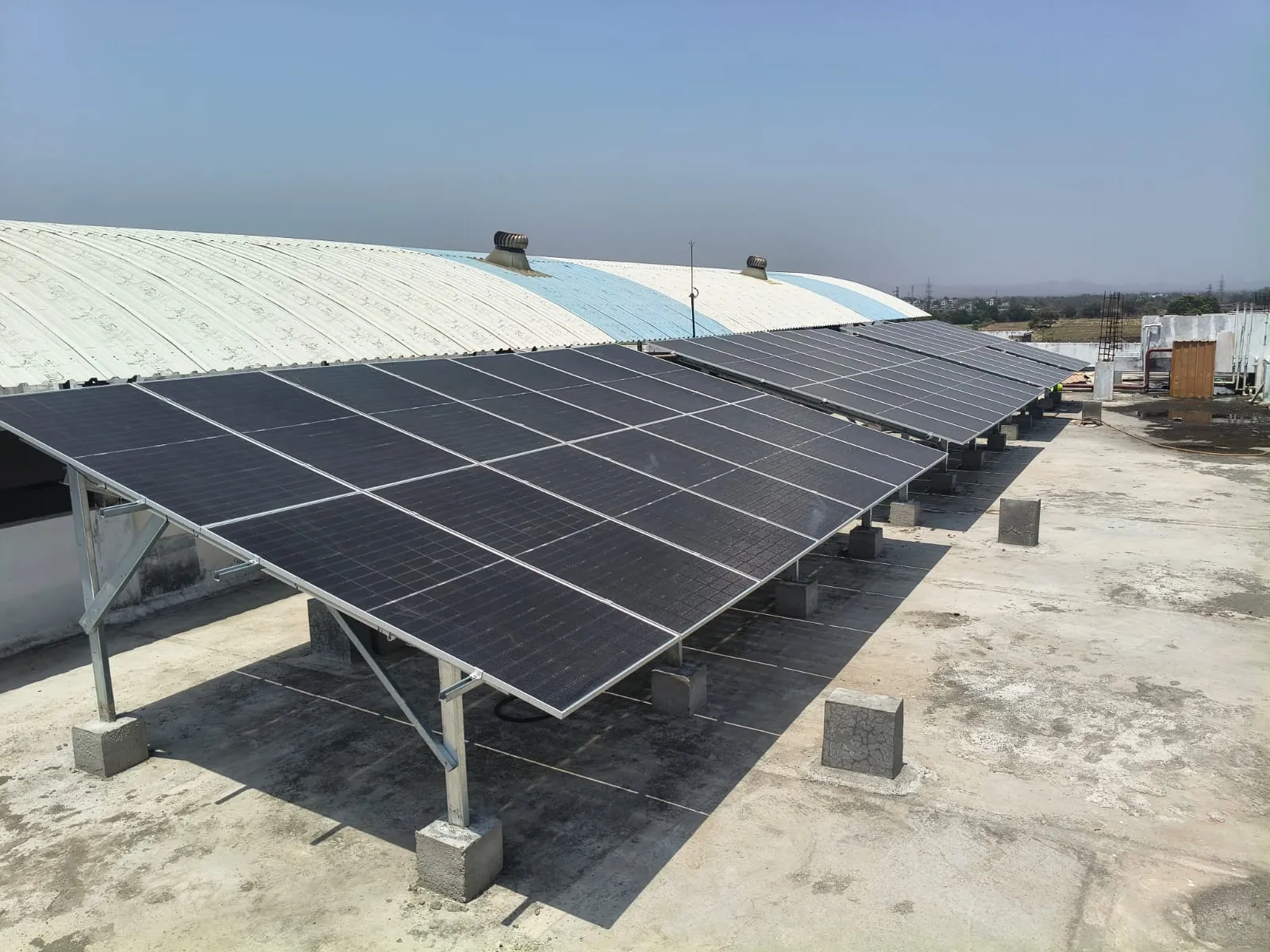
Most shop owners ask the same thing first: will solar actually cover my bill? The honest answer is that it depends on when you use power, not only how much. This page explains how sizing works, how a business is paid for the units it exports, and what to check before you sign. It does not quote prices or savings, because those depend on your bills, your roof and your connection, and you should see them in writing after a site survey. If you want to see how r-solar prices and structures projects, read the solar panel cost guide for MP.
What decides the size of a solar system for a shop
Four things set the size of a solar panel system for a shop or small business, and a good installer asks about all four before naming a number.
- Daytime electricity use. Solar generates while the sun is up, so the units you use between morning and late afternoon matter most. A shop that opens at 10 am and closes at 9 pm uses less of its power directly from solar than a workshop that runs all day.
- Shade-free roof or open area. Water tanks, parapets, neighbouring buildings and trees all cast shade. Only the shade-free area can host panels, and the roof must be strong enough and accessible for safe installation and cleaning.
- Sanctioned load and connection type. Your DISCOM connection category and sanctioned load limit what can be connected under net metering. Your electricity bill shows both.
- Budget and ownership model. Some owners prefer to buy the system, others prefer to pay only for the units generated. This changes how large a system makes sense.
For a first view of your own numbers, try the commercial and industrial solar calculator, then confirm them with a survey.
Solar panel for a shop, and solar for a small factory
A shop and a small factory both qualify as business connections, but they use power differently, and that changes the design.
A shop or office
Loads are usually lights, fans, air conditioning, refrigeration and billing equipment. Use rises through the day and can continue into the evening. A system sized to the daytime part of the load tends to be used almost entirely on site.
A workshop or small factory
Motors, pumps, compressors and machines often run for long hours, frequently on a three-phase supply. Starting currents, power factor and the shift pattern all affect inverter choice and system design. Ask for a load study, not only a roof measurement. For larger plants with high contracted demand, see our page on commercial and industrial solar in Madhya Pradesh.
Rule of thumb: size to the daytime load you can verify on your bills, not to the biggest system your roof can hold. A larger system is not automatically a better one.
How net metering works for a business
Net metering lets a business connect its solar system to the grid through a bi-directional meter. When your panels produce more than the shop is using, the extra units flow to the grid and are recorded. When the panels produce less, such as at night, you draw from the grid as usual. Your bill is then adjusted for the difference as per your DISCOM's rules.
The approval goes through your DISCOM, and the exact rules, limits and settlement method depend on your connection category and the regulations in force. Read the net metering guide for Madhya Pradesh for the process, and ask your installer to confirm in writing which rules apply to your connection.
Buy it, or pay per unit: the two common models
Under CAPEX you purchase the system and own it. Under OPEX or PPA the installer owns the system and you pay for the units it generates. r-solar offers both. Neither is always better. The right choice depends on your cash position, your accountant's view on tax treatment and how long you expect to stay at the premises. If you rent the building, get the landlord's written permission for rooftop work before anything else.
Whichever model you choose, check the installer first. Our guide on how to choose a solar installer in MP lists what to verify.
What a good site survey covers
A site survey is where a proposal becomes reliable. r-solar's process starts with a load audit, which looks at 12 months of your electricity bills and the site layout so the system is sized correctly. In practice, expect the surveyor to cover:
- Your electricity bills, sanctioned load, connection type and meter details.
- Roof type, condition, load-bearing strength, access and the safe route for cabling.
- Shadow analysis across the day, including future construction that could block the sun.
- Location for the inverter, earthing and the point of connection to your panel board.
- The DISCOM paperwork needed, and who files it.
How to read a solar quote
Two quotes with the same system size can be very different projects. Compare them line by line.
- Scope: does the price include design, installation, net metering approvals, meter and commissioning, or only hardware?
- Equipment: panel and inverter make and model, and whether the panels are on the ALMM list.
- Warranty: product and performance warranty terms, in writing, with the certificates.
- Service: who maintains the system, and how fast they respond in your town.
- Exclusions: structure changes, extra cabling, civil work or fees not included.
r-solar quotes are fully managed: the price covers engineering, installation, grid and net metering approvals and paperwork, with accountability from first site survey to commissioning. r-solar has completed 1,500+ installations across Madhya Pradesh, covering residential rooftop systems, commercial buildings, and industrial facilities, and is headquartered in Barwani with offices in Indore, Khargone, and Ahmedabad.
Where to go next
If your shop or unit is in or near Indore, see commercial solar in Indore. For a quote based on your own bills and roof, contact the r-solar team and ask for a free site visit.
Want a proposal based on your own bills?
Get a free site visitFrequently asked questions
Can a shop run fully on solar power?
A shop can cover a large part of its daytime use with solar, but solar only generates when the sun is up. With net metering, extra daytime units go to the grid and are adjusted against your bill as per your DISCOM's rules, and the grid still supplies the shop at night. A site survey of your bills and roof tells you how much of your use solar can realistically cover.
What size solar panel system does a shop need?
The size depends on your daytime electricity use, the shade-free roof area, your sanctioned load and your DISCOM's rules for your connection category. An installer reads 12 months of electricity bills, checks the roof and proposes a size. Be careful of any installer who names a system size before seeing your bills and your roof.
Is solar for a factory different from solar for a shop?
Yes. A small factory usually runs motors and machines for long hours, often on a three-phase connection, so more of its solar power is used on site during the day. A shop often has lighter loads and some evening use. The design, the inverter choice and the DISCOM paperwork differ, so a factory needs its own load study.
Does a shop need to buy the solar system, or are there other options?
There are two common routes. Under CAPEX you buy the system and own it. Under OPEX or PPA the installer owns the system and you pay for the units it generates. r-solar offers both models, and the right one depends on your cash position, your tax advice and how long you will stay at the premises.
What should I check in a solar quote for my shop?
Check that the quote states the system size, the make and model of panels and inverter, whether the panels are ALMM approved, who files the net metering application, what warranty comes in writing and what is left out. Compare quotes line by line, not only by the total, and ask for the site survey findings behind the proposed size.
Who handles the DISCOM approvals for a small business connection?
A good installer prepares the documents and files the net metering application with your DISCOM for you. r-solar handles the design, installation, grid and net metering approvals and the paperwork as one managed project. Ask any installer to show you in writing who is responsible for each approval step.