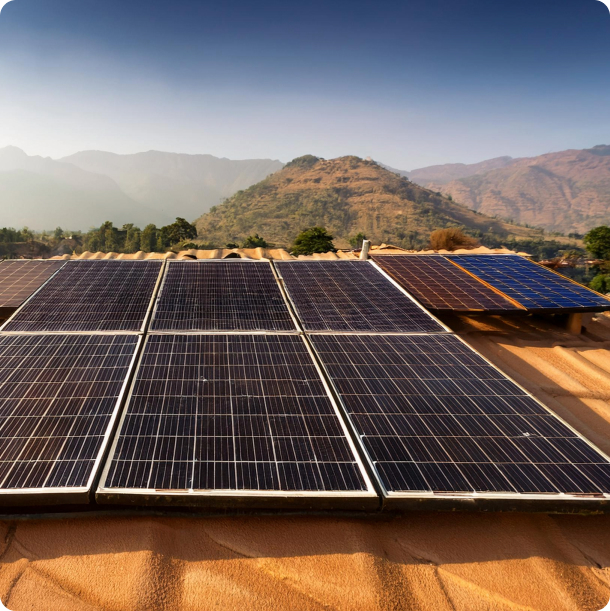
India stands at the cusp of a solar revolution. As one of the world's fastest-growing economies, our energy needs are surging. Fortunately, our geography blesses us with abundant sunlight, making solar energy not just a viable option, but a strategic necessity. The future of solar in India is bright, driven by technological innovation, supportive government policies, and a growing environmental consciousness among citizens.
1. Technological Advancements Driving Efficiency
The efficiency of solar panels has improved dramatically over the last decade. From traditional polycrystalline panels to advanced monocrystalline PERC (Passivated Emitter and Rear Cell) modules, we are now able to generate more power from the same surface area. Bifacial solar panels, which capture sunlight from both sides, and building-integrated photovoltaics (BIPV) are becoming increasingly popular, allowing solar to be seamlessly integrated into our infrastructure.
2. Energy Storage: The Game Changer
One of the historical challenges of solar energy has been its intermittent nature—produced only when the sun shines. However, advancements in battery technology, particularly Lithium-ion batteries, are changing the game. Hybrid solar systems that combine solar generation with battery storage allow homes and businesses to store excess energy generated during the day and use it at night or during power cuts. This empowers consumers with true energy independence.
3. Government Initiatives and Policy Support
The Indian government has set ambitious targets for renewable energy capacity. Schemes like the PM Surya Ghar Muft Bijli Yojana are democratizing access to solar power, providing substantial subsidies to residential households. Net metering policies (like RG-39 in Madhya Pradesh) ensure that consumers are financially rewarded for the excess power they feed back into the grid. These policies reduce the payback period of solar installations significantly, making it a smart financial investment.
4. Economic and Environmental Impact
Adopting solar is not just about saving on electricity bills; it's about contributing to a greener planet. Every kilowatt of solar capacity installed offsets approximately 1.4 tons of carbon dioxide annually. For a typical home, this is equivalent to planting dozens of trees every year. Moreover, the solar industry is a massive job creator, generating employment in manufacturing, installation, and maintenance sectors across the country.
Conclusion
The future of energy is decentralized, digital, and decarbonized. Rooftop solar is at the heart of this transition. For homeowners in Madhya Pradesh, the time to act is now. With falling equipment costs, rising grid tariffs, and robust subsidy schemes, going solar is a decision that pays dividends for decades. Join the movement towards a sustainable future with R-Solar.
Ready to be part of the future?
Calculate Your Savings Now